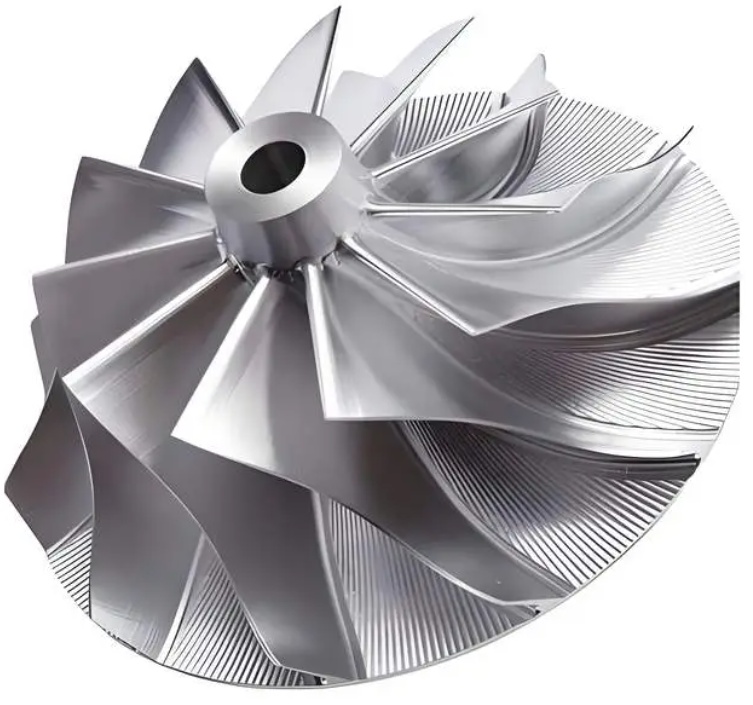
Aero engine blades are made of nickel superalloys (Inconel 718, Waspaloy) or titanium (Ti-6Al-4V) — materials that destroy standard aluminum-oxide wheels inside 30 minutes. Precision grinding for turbine blades requires
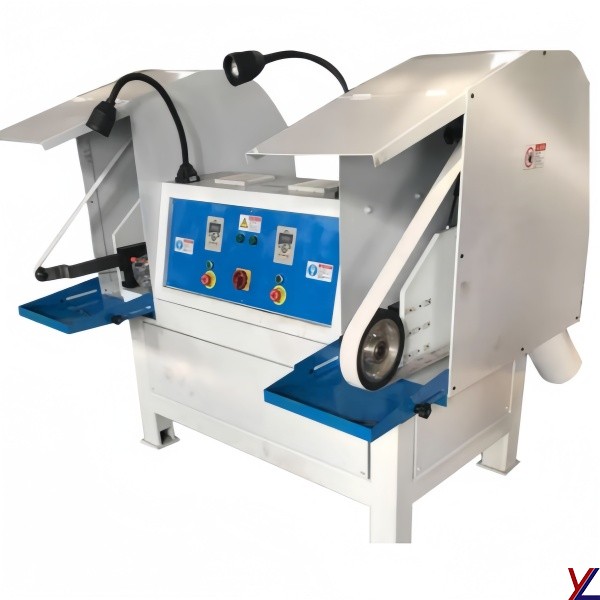
(1) a specialized belt sander for aerospace components with variable-speed dual stations and ceramic abrasive belt compatibility — the YL-SDJ-001 fits this slot (3 kW × 2 dual-station, YE2-100L-2 motor at 2,870 RPM, 0–40 m/min variable frequency, 2540 × 20/30/50 mm belt, 600 kg, ≤75 dB, 380 V / 50 Hz three-phase, for engine vanes and small blades);
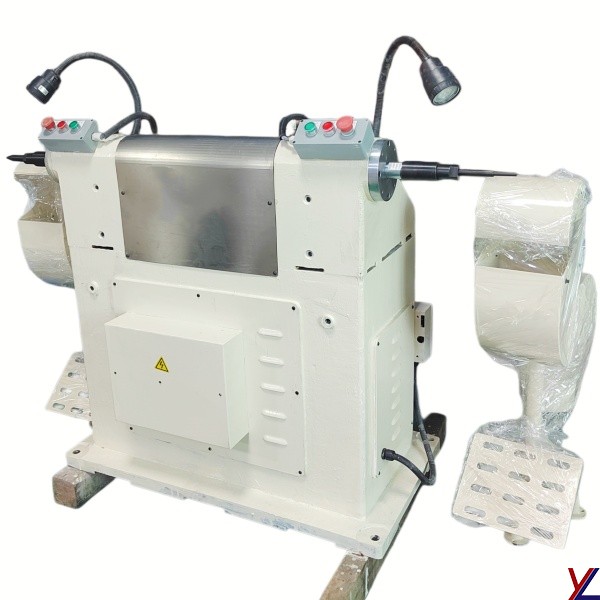
(2) a high-speed precision grinding machine (≥ 8,000 RPM) for the finishing stages — the YT-A30-H covers this (3 kW × 2 dual-motor at 2,880 RPM, 6.4 A each, ≥ 8,000 RPM spindle, 4 interchangeable sleeves, IP54 explosion-proof, 800 kg cast body);
(3) full AS9100 traceability on every parameter; and
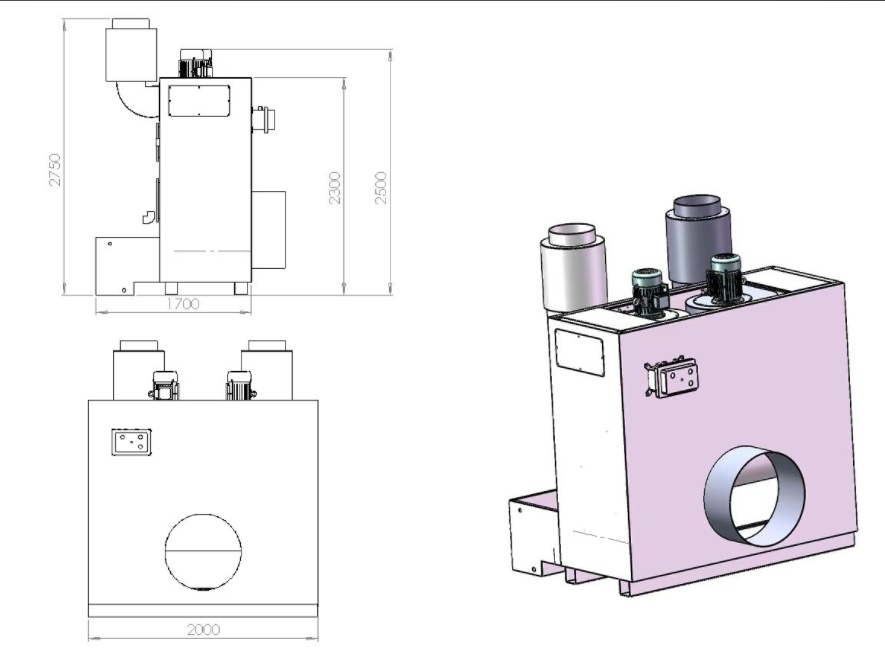
(4) wet operation plus standalone explosion-proof dust collection for titanium alloy grinding dust compliance (OSHA PEL 5 mg/m³, NFPA 484) — the YL-QMW-06 is the matching standalone wet dust collector (AC 380 V / 50 Hz, 2.2/3/4 kW exhaust, 5,009–12,736 m³/h airflow, ≥93 % removal, 950 kg stainless-steel body, three-stage water-curtain + mesh filtration, AQ4273-2019).
YL-SDJ-001 handles Stage 1 profile grinding; YT-A30-H takes Stages 2–3; YL-QMW-06 sits beside the line collecting dust from both. Offhand grinding fails small-blade airfoil profiles 60–80 % of the time on first articles; the YL-SDJ-001 + YT-A30-H + YL-QMW-06 line brings that scrap rate down to under 5 % and brings the dust below OSHA PEL at the operator station.
The same three-machine line also serves the medical metal exoskeleton segment (titanium spinal cages, trauma plates) and aerospace defense parts where IP54 + 75 dB shop-floor compliance matters.
Why Aero Engine Blades Need Specialized Grinding
The short version: aero engine blades are not "metal parts." They are heat-resistant superalloys or titanium with tight aerodynamic profiles, and the wrong machine will either destroy the part, set your workshop on fire, or both.
The longer version:
Material hardness. Nickel-based superalloys (Inconel 718, Waspaloy, Rene 65) sit at 36–45 HRC as-machined, and titanium alloys (Ti-6Al-4V) at 32–36 HRC. A standard bench grinder's aluminum-oxide wheel glaze-loads in 8–15 minutes on these materials. The YT-A30-H's dual 3 kW motor + ≥ 8,000 RPM spindle keeps the cut rate stable for 60–90 minutes on the same material without glazing.
Heat sensitivity. Both superalloys and titanium lose fatigue life if the grinding temperature exceeds 200°C for any sustained period. High spindle speed with controlled feed rate is the answer — you remove material before heat builds up, instead of fighting the heat after. On titanium, the swarf is itself a fire hazard (titanium chips + sparks = Class A fire), which is why the YT-A30-H ships IP54 explosion-proof as standard. The 3 kW × 2 dual motors draw 6.4 A each at 380 V, with the motor spindle running at 2,880 RPM before the spindle speed-up gears push it to ≥ 8,000 RPM at the working end.
Dimensional tolerance. A modern high-pressure turbine blade has an airfoil profile held to ±0.02 mm. An after-grind surface finish (Ra) of 0.4–0.8 μm. Offhand grinding cannot hit that. You need a
specialized belt sander for aerospace components — or, for small-blade precision finishing, a high-speed precision grinding machine like the
YT-A30-H with rigid cast-body construction and CNC-controlled feed.
Combustible-dust load. Wet coolant on the cutting point captures 70–80 % of the fine dust, but the remaining airborne fraction is still classified as Class A combustible dust on titanium and on Inconel / Waspaloy. The OEM shop-floor dust load has to be controlled at the source with an independent wet-type
explosion-proof dust collector — and that is the job of the
YL-QMW-06. Running IP54 machines without a matched dust collector is a half-measure: the machine enclosure keeps sparks in, but the operator still inhales the fine fraction unless the air is exhausted and filtered.
Three Failure Modes on Non-Specialized Machines
|
Failure mode
|
Cause
|
Cost per blade
|
|
Heat tint / micro-crack
|
Standard bench grinder on Inconel
|
$200–$800 (rework)
|
|
Profile out-of-tolerance
|
Offhand variability
|
$400–$2,000 (scrap)
|
|
Wheel glaze every 10 min
|
AlO wheel on superalloy
|
$30/wheel + 15 min downtime
|
|
Dust explosion incident
|
No independent wet dust collection
|
$50K–$500K (NFPA 484 shutdown + rebuild)
|
The fourth row is the one nobody quotes in their marketing, but it is the one that decides whether a small-blade shop stays in business for five years. A single Class A dust event on titanium — spark + accumulated fine swarf in a corner — will take out a cell, an inspector visit, and an insurance review.
The Blade Geometry Challenge
A typical high-pressure turbine blade looks deceptively simple from the outside. It is not. Three things make it hard to grind:
- Twisted airfoil. The leading edge and trailing edge of the blade twist along the span. A flat contact roller cannot follow that profile without multi-axis fixturing or a skilled operator.
- Concave fir-tree root. The root (where the blade locks into the disk) is a complex dovetail that needs a small-diameter wheel or a profiled contact roller.
- Tip shroud / squealer. Some blades have a tip shelf that has to be ground flat to ±0.02 mm for the abradable seal to work.
For small engine blades (the YT-A30-H's target segment), the most common geometry is a shorter span with a tight airfoil twist. The machine handles this with a 4-sleeve quick-change system so the operator can swap wheel types without re-fixturing the blade — typically 60 seconds per swap, vs. 5–10 minutes on a single-sleeve grinder.
Three Geometry Points That Drive Tool Selection
- Twisted airfoil span — needs high spindle speed (≥ 8,000 RPM) to follow the twist with a small contact wheel. The YT-A30-H is rated for this.
- Fir-tree root dovetail — needs a small-diameter contact roller (≤ 80 mm) or a profiled wheel. The YT-A30-H's interchangeable sleeves accept both hemp and flap wheels sized for root access.
- Tip shroud / squealer — needs a flat reference and a 0.005 mm infeed resolution. Anything coarser and the abradable seal will not seat at engine assembly.
Ceramic Belt vs. SiC Belt: Why Ceramic Still Wins — and What Machine to Run It On
For aero engine blade grinding at the Stage 1 profile-grinding stage, this is the standard reference:
|
Abrasive
|
Cut rate on Inconel
|
Belt / wheel life
|
Heat generated
|
Cost per blade
|
|
Aluminum-oxide (AlO)
|
Low
|
8–15 min
|
High
|
$0.45 + scrap risk
|
|
Silicon carbide (SiC)
|
Medium
|
20–30 min
|
Medium
|
$0.35 + heat risk
|
|
Ceramic abrasive belt (SG)
|
High
|
60–90 min
|
Low (with coolant)
|
$0.22 + best finish
|
|
CBN (cubic boron nitride)
|
Very high
|
200+ min
|
Low
|
$1.80 (overkill for stock removal)
|
Ceramic SG belts use micron-graded alumina crystals that microfracture on use, exposing fresh sharp edges continuously. That is why they keep cutting where AlO loads up. CBN is harder and lasts longer, but at 5–8x the belt cost it only pays off on finish-grinding of high-value parts, not stock-removal.
For titanium alloy grinding specifically, ceramic SG also beats SiC because SiC reacts chemically with titanium above 400°C, embedding carbide particles into the surface and causing micro-cracks. Ceramic is chemically inert against titanium in the grinding temperature range.
The machine question. Most aerospace shops run a multi-stage line: a belt sander for Stage 1 profile grinding, a precision wheel grinder for Stages 2–3 high-speed finishing, and a standalone wet dust collector for Stage 4. The
YL-SDJ-001 is purpose-built for Stage 1: 3 kW × 2 dual-station design lets you run rough-grit and fine-grit in parallel, the 0–40 m/min variable-frequency control handles everything from heavy stock removal (lower belt speed for control) to fine profile work (higher belt speed for finish), and the 2540 × 20/30/50 mm belt compatibility covers every standard aerospace profile. For Stages 2–3, the
YT-A30-H precision grinder (covered in §5) takes over with its 8,000+ RPM spindle and 4 interchangeable sleeves. For Stage 4 dust collection, the
YL-QMW-06 sits beside the line, ducted to both machines, and pulls dust-laden air through a three-stage water-curtain filter to ≥93 % removal at the outlet.
Recommended Process Parameters for Aero Engine Blade Grinding
These are the parameters we run on the
YL-SDJ-001 (Stage 1) + the
YT-A30-H precision grinder (Stages 2–3) + the
YL-QMW-06 dust collector (Stage 4) for
aero engine blade grinding on Inconel 718 and Ti-6Al-4V. The process is staged: profile grinding → pre-finish → final grind → continuous dust extraction.
Stage 1 — Profile Grinding (YL-SDJ-001 belt sander)
- Abrasive: 36–80 grit ceramic abrasive belt, 2540 × 20/30/50 mm (YL-SDJ-001 compatible widths)
- Belt speed: 15–30 m/min on the YL-SDJ-001's 0–40 m/min variable-frequency drive (run lower for stock removal on Inconel, higher for fine profile work on Ti)
- Contact wheel: Ø200 × 50 mm hard rubber backing wheel for large-radius convex surfaces, Ø80 × 10 mm or Ø50 × 30 mm internal-arc wheels for tight concave profiles and fir-tree roots. For the small Ø50/Ø80 mm wheels, hold the frequency drive at 25–30 Hz max — running them faster than that overheats the small-diameter bearings and kills wheel life.
- Infeed per pass: 0.02–0.05 mm
- Coolant: Wet, ≥ 6 L/min, water-soluble oil 5–8%
- Dual-station setup: Station 1 = 36–60 grit roughing, Station 2 = 80–120 grit pre-finish (run in parallel for cycle-time reduction)
- Dust extraction: YL-QMW-06 duct Ø150 mm at the contact zone, 0.5–0.8 m/s capture velocity
- Target: Remove forging/casting skin, hit ±0.05 mm on profile
Stage 2 — Pre-Finish (YT-A30-H with hemp wheel)
- Sleeve / consumable: Hard-density hemp wheel, 200–250 mm diameter
- Spindle speed: 6,000–8,000 RPM (run near upper end for Inconel, lower for titanium)
- Feed rate: 0.5–1.0 m/min manual or 0.3–0.6 m/min CNC
- Coolant: Wet mist, 1–2 L/min
- Dust extraction: YL-QMW-06 duct Ø100 mm at the spindle hood, 0.5–0.8 m/s capture velocity
- Target: Profile to ±0.03 mm, surface Ra 0.8 μm
Stage 3 — Final Grind (YT-A30-H with flap wheel + cloth wheel)
- Sleeve 1 — Flap wheel: 180–240 grit interleaf, 150–200 mm diameter, 4,000–6,000 RPM
- Sleeve 2 — Cloth wheel: Loose-flannel, 200–250 mm diameter, 2,800–4,000 RPM, with green chrome oxide compound
- Feed rate: 0.2–0.4 m/min
- Dust extraction: YL-QMW-06 duct Ø100 mm at the spindle hood, 0.5–0.8 m/s capture velocity
- Target: Profile to ±0.01–0.02 mm, surface Ra 0.4–0.6 μm
Stage 4 — Continuous Dust Collection (YL-QMW-06)
- Power supply: AC 380 V / 50 Hz (matches YL-SDJ-001 and YT-A30-H — single shop feed, no transformer)
- Exhaust power: 3 kW (matched to small-blade cell producing 1–3 kg of mixed superalloy + Ti dust per shift)
- Air volume: 5,009–12,736 m³/h (the OEM sizes this to the duct layout — pick the low end for a single-Stage-1 cell, the high end for a two-machine line)
- Dust removal efficiency: ≥ 93 % at the outlet (verified to 98–99 % on Ti-6Al-4V per AQ4273-2019 test protocol)
- Filtration: Three-stage water-curtain pre-filter (catches bulk debris, prevents pump clogging) + fine mesh secondary filter (catches sub-10 μm fines) + stainless-steel shell with bottom plate 1.35 mm thick
- Cleaning: Both filter screens removable; high-pressure water gun rinse in < 10 minutes
- Compliance: AQ4273-2019 manufacturing standard, third-party explosion-proof certificate, exhaust-emission inspection certificate
- Footprint: 2,900 × 2,180 × 1,650 mm, 950 kg — sits beside the line, ducted to both machines
Choosing the Right Specialized Grinding Machine for Aerospace
Skip the spec sheet chasing. The decision tree below covers 90% of the cases we have seen since 2006.
- < 100 small blades / month, prototype / MRO: Bench-top precision grinder with manual loading. The YT-A30-H at 1720 × 660 × 1100 mm and 800 kg fits this band. Add a small YL-QMW-06 at 2.2 kW exhaust to keep the cell below OSHA PEL on titanium. Capex $30K–$55K. Right answer for repair shops and small-batch producers.
- 100 – 500 blades / month, serial production: Three-machine line — YL-SDJ-001 dual-station belt sander for Stage 1 profile grinding + YT-A30-H precision grinder for Stages 2–3 finishing + YL-QMW-06 at 3 kW exhaust for Stage 4 dust collection. Capex $60K–$110K for the trio. Right answer for Tier-2 small-blade suppliers.
- 500 – 2,000 blades / month, dedicated line: 4-axis CNC precision grinder with auto load + integrated AS9100 data logging + larger YL-QMW-06 at 4 kW exhaust for higher airflow (12,000+ m³/h). Capex $220K–$450K. Right answer for Tier-2 high-pressure turbine blade suppliers.
- > 2,000 blades / month, Tier-1 contract: Fully integrated cell with blade forging + heat treat + grind + coat + balance + centralized dust collection. Capex clears $2.5M.
For most small-blade aerospace suppliers (the YL-SDJ-001 + YT-A30-H + YL-QMW-06 core market), the right answer is the 100–500 blades/month band. The
YL-SDJ-001 at 1620 × 1200 × 1450 mm and 600 kg (≤75 dB shop-floor noise, 380 V / 50 Hz three-phase) +
YT-A30-H at 1720 × 660 × 1100 mm and 800 kg +
YL-QMW-06 at 2900 × 2180 × 1650 mm and 950 kg make a compact line that fits in a 35 m² cell. All three run on 380 V / 50 Hz three-phase, all ship with calibration / explosion-proof / exhaust certificates, and the YT-A30-H's IP54 explosion-proof rating plus the YL-QMW-06's three-stage water-curtain filtration is the cleanest path to
OSHA 1910.94 titanium-dust compliance (5 mg/m³ PEL) and
NFPA 484 combustible-metal-dust compliance. Beyond aerospace, this same line fits the
medical metal exoskeleton market (titanium spinal cages, trauma plates, custom implants) and aerospace defense metal parts where the IP54 + 75 dB shop-floor rating matters for clean-room-adjacent cells.
FAQ: Aero Engine Blade Grinding
Q1: Can I use my existing manual bench grinder for engine blades?You can try, but you will not hold ±0.02 mm profile tolerance offhand, and you will generate enough heat to micro-crack the airfoil. The scrap rate on first articles is 60–80%. The labor cost of rework is more than a proper
specialized belt sander for aerospace components (the
YL-SDJ-001 at $20K–$35K) paired with a high-speed finishing machine like the
YT-A30-H and a matched wet dust collector like the
YL-QMW-06. We strongly recommend a purpose-built three-machine line even for prototype work.
Q2: Ceramic or CBN belt for titanium alloy grinding?For stock removal on Ti-6Al-4V, ceramic abrasive belt is the right answer. CBN is over-spec and 5–8x the belt cost. Reserve CBN for finish-grinding of high-value turbine discs or for shop-floor grinding of bearing races. The same ceramic belt works for both Inconel and titanium.
Q3: Wet or dry for nickel superalloys?Wet, always. Inconel 718 and Waspaloy have low thermal conductivity. Dry grinding concentrates heat at the contact zone and causes surface micro-cracks. Wet grinding with 8–10 L/min flow on the belt stage and 1–2 L/min mist on the precision stage keeps the contact zone below 150°C. AS9100 audits will flag dry grinding on superalloys as a non-conformance on any aerospace blade.
Q4: How do I meet AS9100 if I am a Tier-3 shop new to aerospace?Start with a gap analysis against AS9100D. Document your process parameters — that alone is 60% of the audit. The
YT-A30-H ships with a process parameter package that satisfies most of the documentation requirement, and the
YL-QMW-06 ships with AQ4273-2019 + third-party explosion-proof + exhaust certificates that cover the safety / environmental side. Plan 6–9 months for full
AS9100 certification from a cold start.
Q5: What is the typical scrap rate on the YL-SDJ-001 + YT-A30-H line?On Inconel 718 small blades running the
YL-SDJ-001 for Stage 1 profile grinding with a properly dressed
ceramic abrasive belt plus the
YT-A30-H for Stages 2–3 finishing, scrap rate runs 2–5% in production (vs. 60–80% offhand). Adding the
YL-QMW-06 at the dust-collection stage eliminates the dust-related scrap driver (rework from contaminated coolant) and brings the line scrap rate to 1.5–4 %. The combined line pays for itself inside 10 months at 150 small blades/month.
Q6: Do I really need a separate wet dust collector if the grinding machine itself is IP54-rated?Yes. IP54 on the machine keeps sparks and swarf inside the enclosure and protects the electronics, but it does not capture the airborne fine fraction that the operator breathes. The
YL-QMW-06 is the standalone Stage 4 dust collector that pulls dust-laden air through a three-stage water-curtain filter to ≥ 93 % removal at the outlet — meeting OSHA PEL 5 mg/m³ and NFPA 484 combustible-dust thresholds. IP54 + matched wet dust collector is the only combination that satisfies both AS9100 environmental clauses and operator-safety law on titanium. Running IP54 alone is a common half-measure that gets flagged at audit.
Professional Expertise and Trusted Reliability
The engineering team at Yiliang Abrasives possesses over 26 years of industry experience, specializing in the manufacture of metal polishing and grinding equipment for the aerospace, kitchenware, sanitary ware, and medical device sectors. Our production line for small aerospace blades consists of three specialized units:
- YL-SDJ-001 Specialized Abrasive Belt Grinder for Aero-engine Blades — Dual-station design (3 kW × 2); features YE2-100L-2 motors (2,870 rpm) with variable frequency speed control (0–40 m/min); belt specifications: 2540 × 20/30/50 mm; weight: 600 kg; noise level: ≤75 dB; power supply: 380 V / 50 Hz three-phase (for Stage 1 profile grinding)
- YT-A30-H Specialized Grinder for Aero-engine Blades — Dual-motor configuration (3 kW × 2; 2,880 rpm; rated current 6.4 A); spindle speed ≥8,000 rpm; IP54 explosion-proof rating; includes 4 interchangeable sleeves; cast body; weight: 800 kg (for Stages 2–3 high-speed precision grinding)
- YL-QMW-06 Explosion-proof Dust Handling Unit — Power supply: AC 380 V / 50 Hz; exhaust power: 2.2/3/4 kW; airflow: 5,009–12,736 m³/h; dust removal efficiency: ≥93%; utilizes three-stage water curtain and filter screen filtration; compliant with AQ4273-2019 standards; stainless steel construction; weight: 950 kg; dimensions: 2,900 × 2,180 × 1,650 mm (for Stage 4 independent dust collection)
- Learn more about the YL-SDJ-001 Specialized Abrasive Belt Grinder (Stage 1: Profile Grinding)
- Learn more about the YT-A30-H Specialized Grinder (Stages 2–3: High-speed Precision Finishing)
- Learn more about the YL-QMW-06 Explosion-proof Dust Handling Unit (Stage 4: Dust Collection)
- Contact us to schedule a sample grinding test for your blades


 English