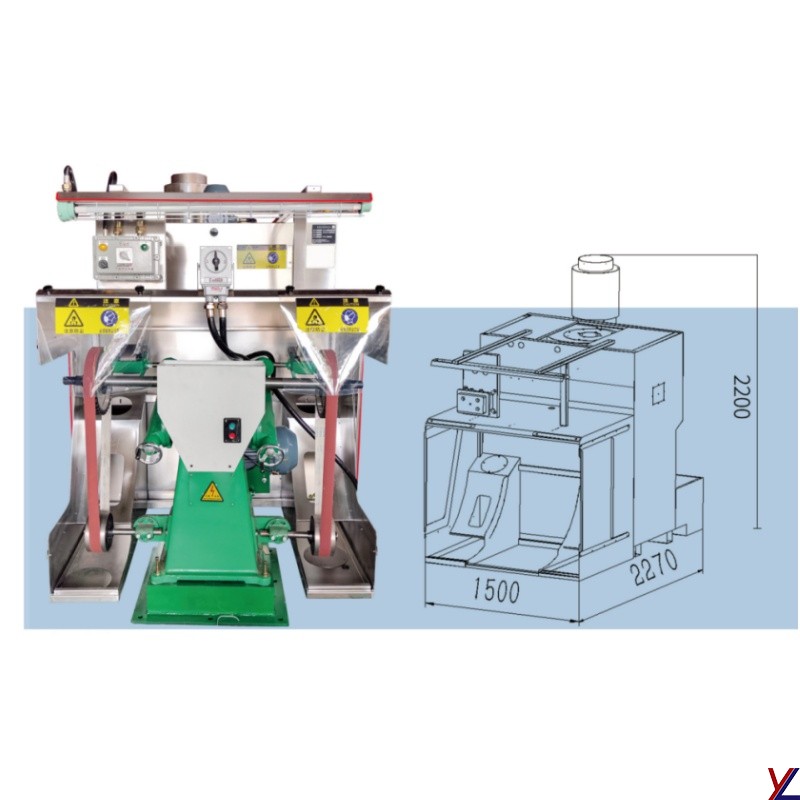
Preventing Combustible Dust Explosions — A Guide to Industrial Polishing Safety
Sep 20, 2026
Metal polishing generates fine combustible dust — aluminum, magnesium, titanium, zinc, and most stainless-steel fines are all Class A combustible dust under NFPA 652. Combustible dust explosion prevention in an industrial polishing workshop dust control context requires three things layered: (1) OSHA 1910.94 ventilation compliance at the operator station (≤ 5 mg/m³ PEL for titanium, ≤ 15 mg/m³ for other metals); (2) NFPA 652 compliance for metal polishing — a documented Dust Hazard Analysis (DHA), ignition-source control, and housekeeping; and (3) the right hardware — an explosion-proof polishing machine (IP54 or better) paired with a wet-type dust collection system. The complete Yiliang answer is a two-product system: the YL-ATPM-061 wet-type poli...


 English