Air Cloth Wheels: The Versatile Essential for Industrial Polishing
Published by Yiliang Grinding | April 2026
Introduction
In the world of metal finishing and polishing, certain tools have stood the test of time. Among them, the air cloth wheel — also known as a sewn cloth wheel or expanding cloth wheel — remains one of the most versatile and widely-used polishing consumables in industrial applications. Despite advances in non-woven materials and automated polishing systems, air cloth wheels continue to be the go-to choice for shops that need flexibility, durability, and consistent results across a wide range of applications. From automotive wheel polishing to aerospace component finishing, from jewelry manufacturing to architectural metalwork, air cloth wheels deliver. In this article, we explore what makes air cloth wheels unique, how they work, their key applications, and how to select the right wheel for your specific needs.
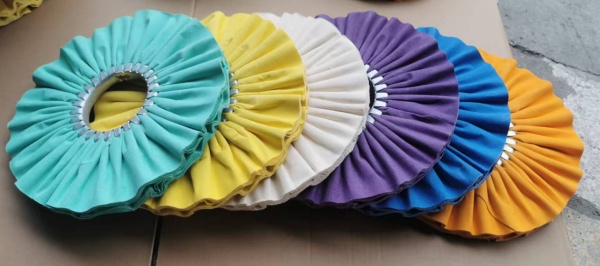
What Are Air Cloth Wheels?
Air cloth wheels are polishing wheels constructed from multiple layers of cotton or cotton-blend fabric, sewn together in a spiral pattern. The term air cloth refers to the fact that these wheels are not cemented or resin-bonded. The layers are held together by thread, creating a wheel with some give or flexibility during operation.
Key Characteristics
Flexibility: Unlike hard felt wheels or resin-bonded wheels, air cloth wheels have a degree of softness and flexibility. This allows them to conform to irregular surfaces and contours, making them ideal for parts that are not perfectly flat.
Durability: The sewn construction means air cloth wheels can be dressed, trued, and used for extended periods. They do not shatter or crack like some harder wheels.
Heat dissipation: The gaps between layers allow for better airflow and heat dissipation during polishing, reducing the risk of workpiece damage from overheating.
Consistency: With proper technique and compound application, air cloth wheels provide consistent cutting and finishing across the entire wheel surface.
Types of Air Cloth Wheels
By Construction
Sewn Cloth Wheels (Standard Air Cloth): Multiple layers of cotton cloth, spiral-sewn. The most common and versatile type. Available in various diameters and thicknesses. Can be used with most polishing compounds.
Loose-Ply or Unsewn Wheels: Layers are not sewn together. Softer and more flexible than sewn wheels. Better for delicate or contoured surfaces. May require more frequent replacement.
Full-Flex or All-Flex Wheels: Extremely flexible construction. Ideal for polishing intricate shapes and profiles. Often used in jewelry and precision metalwork.
By Hardness
Hard Wheels: Dense cotton, tight stitching for aggressive cutting and rapid material removal.
Medium Wheels: Balanced flexibility for general-purpose polishing.
Soft Wheels: Loose layers, high flexibility for final finishing and buffing.
By Application
Rough Polishing Wheels: Used with cutting compounds for rapid stock removal.
Coloring/Pre-Finish Wheels: Used with coloring compounds for achieving smooth, even surfaces.
Final Finish Wheels: Used with polishing compounds (rouge) for mirror finishes.
Applications of Air Cloth Wheels
Automotive Industry
Aluminum Wheel Polishing: Air cloth wheels are a staple in automotive wheel refinishing and manufacturing. Aluminum wheels require initial cutting and smoothing compounds, color refinement with brown or yellow compounds, and final high-luster finish with blue compound or dedicated aluminum polishing compounds. Air cloth wheels work well for both cast and forged aluminum wheels, conforming to the wheel contours and reaching into spokes and intricate designs.
Chrome and Stainless Trim: Automotive chrome and stainless trim components are polished with air cloth wheels, typically using chrome polishing compounds for chrome-plated parts, stainless steel compounds for bare stainless trim, and progressive compounds for restoration work.
Aerospace and Defense
Aerospace component finishing demands tight tolerances and consistent surface quality. Air cloth wheels are used for pre-polishing before final buffing, reaching complex geometries in turbine components, finishing hydraulic fittings and structural components, and compliant-tool applications for inside diameters and bores. The flexibility of air cloth wheels helps aerospace shops achieve consistent results on parts with varying contours and radii.
Medical Device Manufacturing
Medical device manufacturers use air cloth wheels for pre-polishing stainless steel implants and surgical instruments, finishing aluminum and stainless housings for medical equipment, polishing titanium components, and achieving Ra surface finish requirements for FDA compliance.
Jewelry and Precious Metals
The jewelry industry relies heavily on air cloth wheels for polishing gold and silver castings, finishing platinum and palladium jewelry, pre-polishing before rhodium plating, and achieving specific finishes like mirror, satin, or anti-tarnish. Small-diameter air cloth wheels (10-50mm) are essential for jewelry work, allowing technicians to reach intricate details on rings, bracelets, and charms.
Architectural Metalwork
Architectural metalwork includes stainless steel railings, aluminum fixtures, and brass hardware, requiring both functional surface quality and aesthetic appeal. Air cloth wheels are used for stainless steel railings and architectural panels, aluminum entrance systems and store fronts, brass and bronze decorative elements, and copper and tin architectural details.
General Metal Fabrication
Metal fabrication shops use air cloth wheels for removing weld marks and scratches, pre-polishing before plating or coating, achieving specific surface finishes for paint adhesion, and final finishing of fabricated parts.
Selecting the Right Air Cloth Wheel
Key Factors to Consider
1. Wheel Diameter: Larger wheels provide faster material removal and are better for flat surfaces. Smaller wheels offer better access to contours and tight areas. Match wheel diameter to your polishing equipment spindle size and RPM.
2. Wheel Thickness: Thicker wheels provide more contact area and faster cutting. Thinner wheels offer more precise control and are better for details. Consider the workpiece geometry when choosing thickness.
3. Ply (Layers): More plies create a harder wheel with faster cutting. Fewer plies create a softer, more flexible wheel better for finishing. Balance cutting speed against finish quality.
4. Stitching Pattern: Closely-spaced stitching creates a harder wheel face. Widely-spaced stitching creates a softer, more flexible wheel. Some wheels have different stitching on inner versus outer layers.
5. Material: 100 percent cotton is general purpose with good heat resistance. Cotton-poly blend is more durable and better for heavy applications. Flannel or quilted materials are ideal for final polishing and high luster.
6. Center Hole Size: Must match your spindle or mandrel. Reduce with adapters if needed. Consider double-side mounting for balance on larger wheels.
Application Guide
Heavy stock removal requires hard, thick wheels with many plies and Tripoli or cutting greases. General polishing works well with medium hardness wheels and brown or yellow compounds. Color matching uses soft-medium, quilted wheels with coloring compounds. Final mirror finish needs soft, flannel or chamois wheels with rouge compounds. Contoured surfaces require soft, full-flex wheels with fewer plies. Delicate work calls for small diameter, soft wheels with light compounds.
Polishing Compounds for Use with Air Cloth Wheels
The Role of Compound
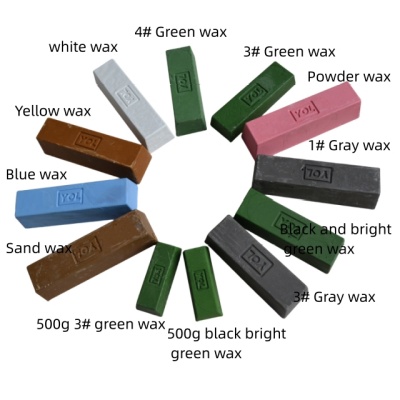
Polishing compounds are what actually do the cutting and finishing work. The wheel is the delivery mechanism while the compound provides the abrasive action. Different compounds are designed for different stages of the polishing process.
Cutting Compounds (Remove Material Fast): (brown or orange) is the most common cutting compound. Gray compounds are used for stainless steel. Black compounds are for initial heavy cutting.
Coloring Compounds (Smooth and Refine): Brown or yellow compounds transition from cut to color. White compounds provide light cutting and color. green compounds are for stainless steel coloring.
Polishing Compounds (Produce Final Finish): Green chrome is for stainless steel polishing. Blue compound is for platinum, white gold, and steel. Red rouge is for gold and silver. Pink rouge is for soft gold alloys.
Application Tips
Charge the wheel properly: Apply compound to a running wheel using light pressure to embed the compound evenly. Over-charging causes waste and potential scratching.
Keep the wheel clean: Accumulated compound buildup reduces cutting efficiency and can cause uneven results. Dress the wheel periodically.
Use the right compound for the metal: Using wrong compounds causes contamination and surface defects.
Control heat: Light pressure and proper technique prevent overheating. If the workpiece is too hot to hold, you are removing too much material too fast.
Maintenance and Care
Extending Wheel Life
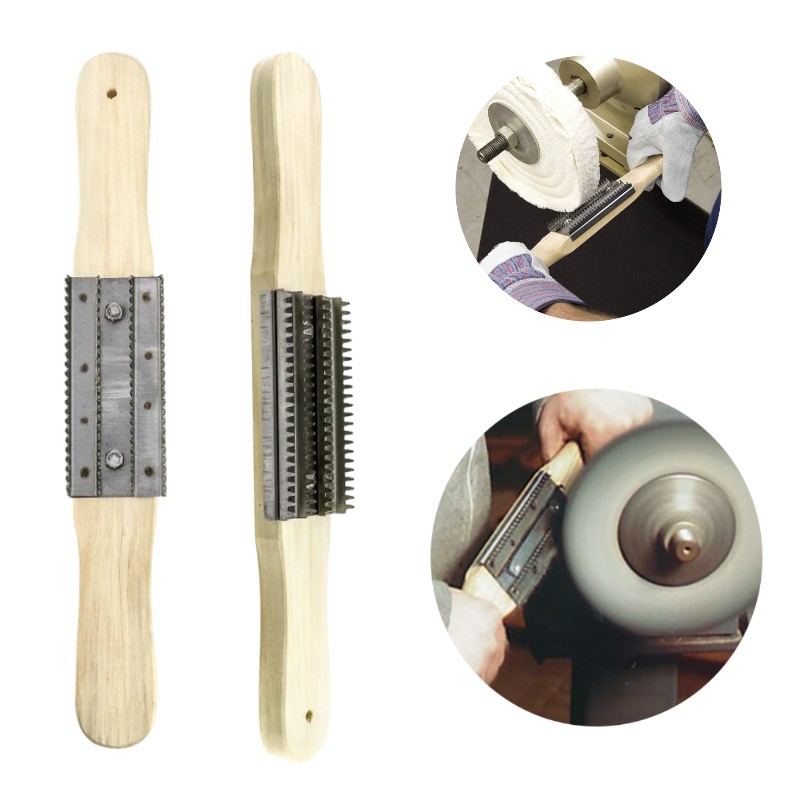
Dressing/Truing: Use a wheel dresser to restore the wheel face and remove accumulated compound. This extends wheel life and maintains consistent performance.
Proper Storage: Store wheels flat to prevent deformation. Keep in a clean, dry area.
Speed Considerations: Do not exceed the wheel recommended RPM. Higher speed means faster cutting but also more heat and wear.
Mounting: Ensure wheels are mounted securely and balanced. An unbalanced wheel causes vibration, poor results, and potential safety hazards.
Safety Considerations
Eye protection: Always wear safety glasses when operating polishing equipment.
Dust and fumes: Use appropriate ventilation and respirators, especially when polishing alloys that may produce hazardous dust.
Secure mounting: Follow equipment guidelines for proper wheel mounting and speed ratings.
Guards: Keep machine guards in place during operation.
Customization Options
Reputable air cloth wheel manufacturers offer customization options including: Custom Sizes for non-standard diameters, thicknesses, and center hole sizes. Custom Stitching with different patterns, densities, and reinforcement. Special Materials such as fire-resistant, anti-static, or food-grade compatible options. Compound Impregnation for pre-charged wheels for specific applications. OEM Packaging with your branding for distributors.
Why Choose a China Manufacturer?
For businesses looking to optimize polishing consumable costs without sacrificing quality, working with experienced China manufacturers offers several advantages including cost efficiency through competitive pricing and direct manufacturer relationships, full customization capability including non-standard sizes and specifications, technical support with compound recommendations and process guidance, sample programs with free or low-cost evaluations, and supply reliability through consistent quality and inventory.
At Yiliang Grinding, we specialize in air cloth wheels and complete polishing solutions for industrial applications worldwide. With over 20 years of experience, we understand the demands of automotive, aerospace, medical, jewelry, and general metal fabrication applications.
Conclusion
Air cloth wheels remain an essential tool in the metal polishing industry for good reason. Their versatility, durability, and ability to handle a wide range of applications make them a valuable investment for any metal finishing operation.
The key to success with air cloth wheels lies in selecting the right wheel specifications for your application, using the appropriate polishing compounds, and maintaining proper technique and equipment.
Whether you are polishing aluminum automotive wheels, finishing aerospace components, or creating high-luster jewelry pieces, air cloth wheels provide the flexibility and consistency you need.
Looking for air cloth wheel samples or custom specifications? Contact Yiliang Grinding export team at suery@yl-polishing.com or WhatsApp +86-139-2885-5603We offer free sample evaluations for qualified manufacturers and distributors.
Have questions about selecting the right air cloth wheel for your application? Share your requirements. Our technical team is happy to help.


 English