5 Low-Budget Automation Upgrades for Small & Mid-Size Metal Finishing Shops (2026 Guide)
For under $15,000 per upgrade, a small finishing shop can usually automate one of five high-leverage points: (1) wax-compound spraying, (2) parts loading/unloading, (3) PLC control of an existing manual machine, (4) an NFPA 652-compliant dust hood, or (5) converting a single-station buffer into a 2- or 4-station rotary table. Each one targets a different bottleneck. Pick the one that matches your current pain — not the flashiest one.
Most shops that skip automation do it for the wrong reason. They assume "automation" means a $150,000 robotic cell. It doesn't. The five upgrades below were all done by 10–40 person shops in 2024–2025, paid back in 6–14 months, and required no new building or power drop.
Who This Guide Is For
This is for job shops, contract finishers, and OEM in-house lines with 1–6 polishing/buffing stations, 5–40 workers, and a production manager who already knows where the bottlenecks are. If your bottleneck is "we need a bigger building," this guide won't help. If your bottleneck is one of the five below, it will.
What you will not find here:
- Six-axis robot cells (out of budget for most shops under 50 people)
- Vision-guided seam tracking (overkill for grinding, wrong tool for buffing)
- Full Industry 4.0 retrofits (that's the next guide)
The 5 Upgrades, Ranked by ROI
We ranked these by payback period in real 2024–2025 installations. The order is not "easiest first" — it's "fastest payback first."
|
#
|
Upgrade
|
Typical cost
|
Payback
|
Difficulty
|
|
1
|
Auto wax/compound spray
|
$3,000–$8,000
|
4–8 months
|
Low
|
|
2
|
PLC retrofit on manual lathe/buffer
|
$5,000–$12,000
|
6–10 months
|
Medium
|
|
3
|
2/4-station rotary table conversion
|
$8,000–$15,000
|
8–14 months
|
Medium
|
|
4
|
NFPA 652 dust hood + extraction
|
$6,000–$14,000
|
6–12 months
|
Medium
|
|
5
|
Semi-auto load/unload conveyor
|
$4,000–$10,000
|
10–18 months
|
Medium
|
A short note on payback math: all five assume the shop is running one shift, 5 days/week, and has at least one full-time operator currently doing the task by hand. If the operator is not yet hired (you are growing), payback is longer because labor savings don't exist yet.
required no new building or power drop.
Upgrade 1 — Auto Wax / Compound Spray System
The pain it solves: Operator dips a bar of compound into a running buffing wheel every 30–90 seconds, gets compound on their hands, and the part finish varies depending on how often they remember to re-apply.
What you add:
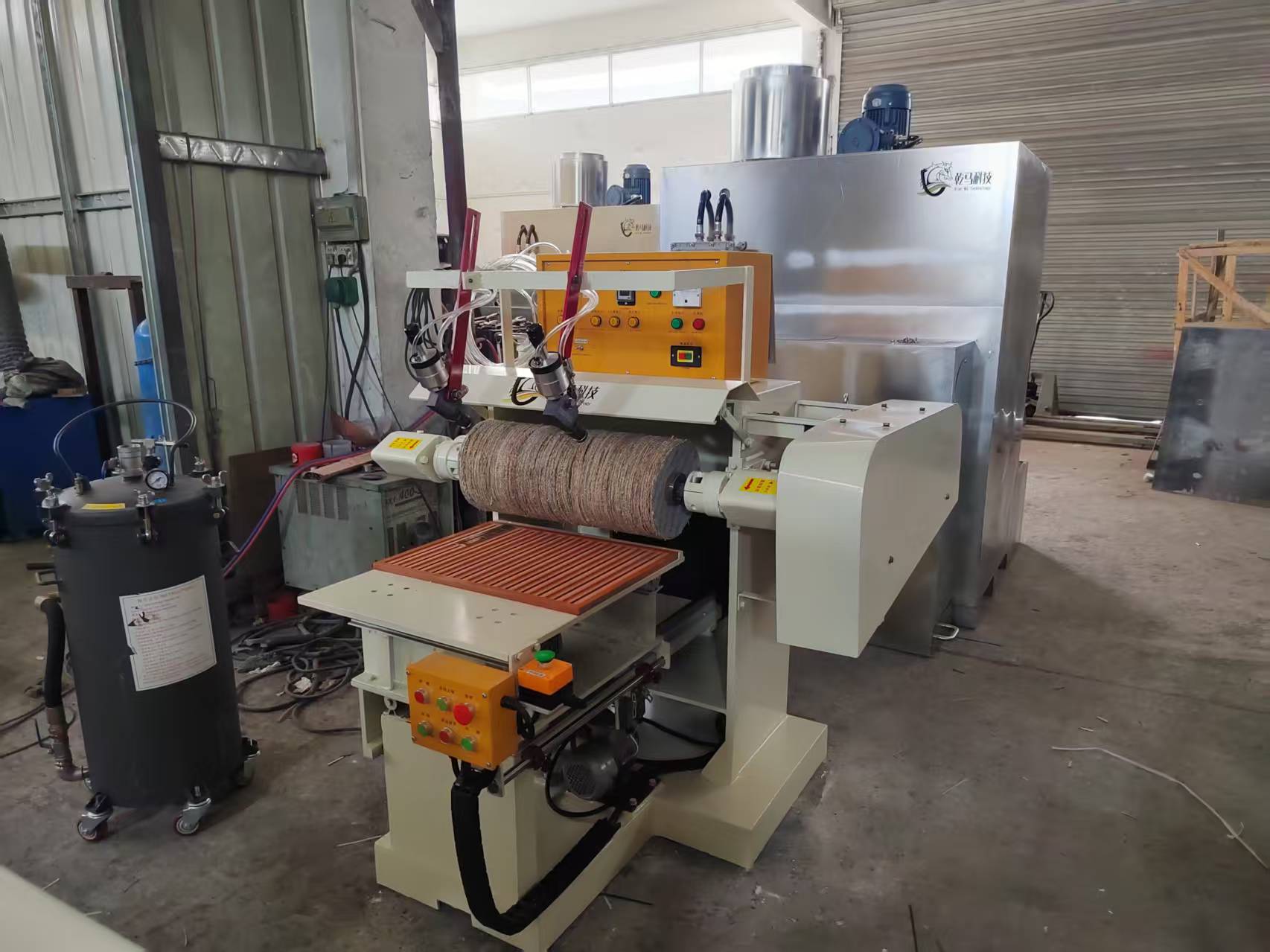
- A 1-barrel, 1–2 nozzle automatic compound spray unit mounted to the existing buffing/linishing machine
- Pneumatic trigger, adjustable spray duration (0.5–3.0 s), 0.2–0.5 mL per shot
- A foot pedal or PLC input so the cycle is repeatable
Cost range: $3,000–$8,000 installed (depends on whether you need a barrel heater for hard compound bars)
Real numbers from a 2025 install (sanitary ware OEM, Foshan):
- Labor saved: 0.6 FTE per shift (operator no longer babysits the wheel)
- Compound waste reduced: 18% (manual dipping loads too much; spray loads what the part needs)
- Finish rejection dropped from 3.1% to 0.9% on stainless basin rims
When NOT to do it:
- Your cycle time per part is over 2 minutes (spray cadence won't help)
- You use 5+ different compounds per shift (the system works best with 1–2)
Where it fits in our catalog: Look at the auto-wax option on the polishing machine line, or as a stand-alone skid for retrofit.

Upgrade 2 — PLC Retrofit on a Manual Buffer or Lathe
The pain it solves: A skilled operator runs a manual buffing lathe, gets repeatable results, and is the only person who can run it. When they're sick, the line stops. When they leave, the finish changes.
What you add:
- Replace the existing relay/contactor stack with a small PLC (e.g., 12–16 I/O, no HMI required for simple stations)
- Add: cycle counter, run-time hour meter, fault lamp, E-stop relay
- Keep the manual foot pedal — operators still want hands-on control of pressure
Cost range: $5,000–$12,000 including panel build, install, and one week of operator training
What you actually gain:
- Every shift's part count is recorded — no more "we made about 400 yesterday"
- A new operator is productive in 3 days instead of 3 weeks
- Cycle time data lets you quote jobs at the actual rate, not a guess
- The PLC is the foundation for Upgrade 3 (rotary table) and Upgrade 5 (conveyor) later
When NOT to do it:
- The existing machine has a worn spindle, bad bearings, or a cracked frame — fix the machine first
- You run fewer than 200 parts per shift (data doesn't earn its keep)
Compatibility check: Most 2010+ Chinese-built and European-built manual buffers can be retrofitted. For very old machines (pre-2000), the cost creeps toward the cost of a new machine and you should compare.
For machine-side integration, see our PLC-controlled polishing machine line as a reference for what a modern retrofit looks like.
Upgrade 3 — Convert a Single-Station Buffer into a 2- or 4-Station Rotary Table
The pain it solves: One operator, one part at a time. Floor space is used 30% of the time. Loading + unloading the part takes 25% of the cycle.
What you add:
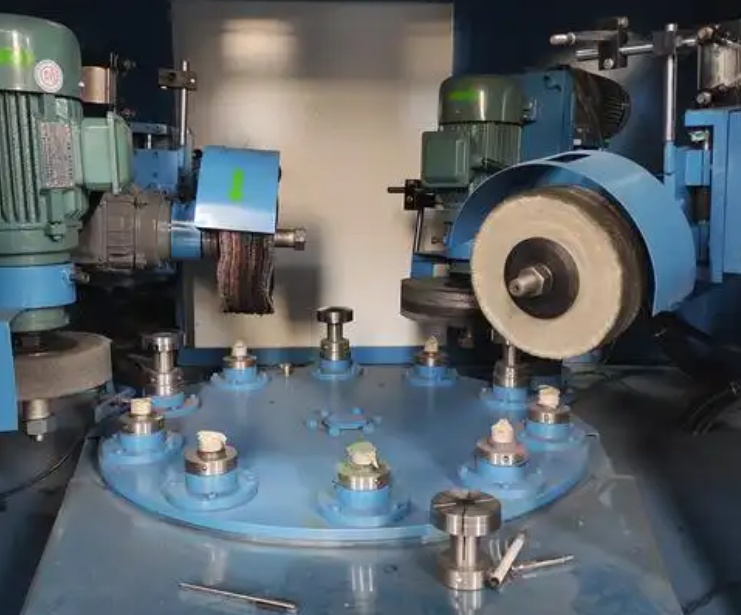
- A rotary indexing table (2-station or 4-station) with 1–4 buffing/polishing heads above
- Indexer driven by a small servo or a mechanical cam (cam is cheaper, servo is more flexible)
- Operator stands in one position and loads/unloads from the same spot while the other stations polish
Cost range: $8,000–$15,000 for a 2-station; $12,000–$22,000 for a 4-station (the 4-station is the most common and usually the right answer)
Real numbers (2024, hardware lock OEM, Guangdong):
- Throughput: 1 part every 38 seconds → 1 part every 14 seconds
- Labor: 1 operator per table instead of 1 per machine
- Floor space: 4.2 m² vs 6.8 m² for equivalent capacity
When NOT to do it:
- Your parts are over 8 kg or over 600 mm long (table size jumps and ROI changes)
- Your cycle includes more than 3 polishing steps (use a linear conveyor instead)
Pro tip: Order the rotary table before you order the new buffing heads. The table dictates the head spacing; the heads then match the table.

Upgrade 4 — NFPA 652-Compliant Dust Hood + Extraction
The pain it solves: Fine aluminum, magnesium, or stainless dust is collecting on flat surfaces. Your local fire inspector has flagged the room. Workers complain about dust. You are one spark away from a primary explosion.
What you add:
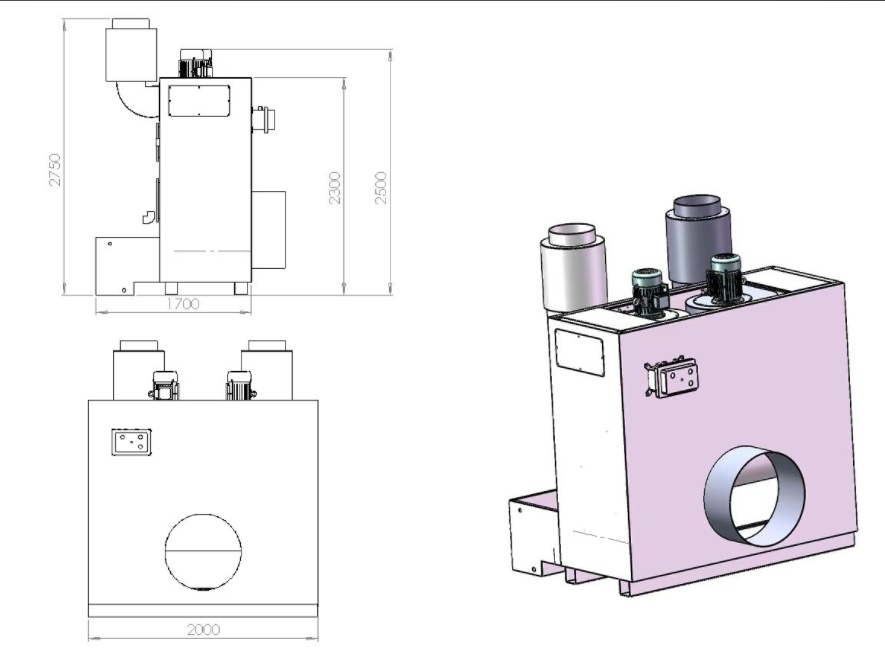
- A closed dust hood that encloses the buffing/grinding zone (not a "best-effort" partial enclosure)
- An explosion-proof extraction unit rated for the dust class you generate (metal dust, not wood dust)
- A flameless relief vent if your dust is aluminum or magnesium
- Auto damper on the extraction duct that closes on spark detection
Cost range: $6,000–$14,000 for a single-station closed hood + matched extractor. Less than the fine you'd get from OSHA or your local fire marshal.
Why this is on the automation list, not a "safety" list:
- An unhooded station cannot run unattended (a worker must watch for sparks)
- A properly hooded station can run with the operator at a 3 m distance — which means you can run 2 stations per operator instead of 1
When NOT to skip it:
- If you grind aluminum, magnesium, titanium, or zirconium, you need explosion protection regardless of automation plans. NFPA 652 (US) and ATEX 2014/34/EU (EU) are not optional.
For a deep dive on the regulatory side, see our explosion-proof polishing machine guide and our recent NFPA 652 dust extraction buyer's guide.

Upgrade 5 — Semi-Automatic Load/Unload Conveyor
The pain it solves: Operator walks 4–6 meters per cycle to grab a part, walk back, set it down, polish, walk again. 25–35% of cycle time is walking, not polishing.
What you add:
- A short belt conveyor (2–4 m) with a pneumatic lift or pusher at the polish station
- Parts arrive in a fixture, get polished, exit to an inspection tray or downstream operation
- Operator stays at one station for 30–60 minutes at a time
Cost range: $4,000–$10,000 for a 2 m conveyor + pneumatic loader
Why this is #5 and not #1: It only pays off when cycle time per part is under 60 seconds. For longer cycles, the operator spends more time waiting than walking, and a conveyor doesn't help.
When NOT to do it:
- You run 50+ different part numbers per week (fixture changeover eats the savings)
- Your parts are fragile and cannot ride a belt without scratching
For buffer-side integration, see our consumables and machine integration guide.
How to Pick the Right One
Use this 3-question filter:
- What is the single biggest labor bottleneck? If it's a worker applying compound → Upgrade 1. If it's skilled-operator dependency → Upgrade 2. If it's floor space per part → Upgrade 3.
- What is your regulatory exposure? If a fire inspector or OSHA visit is overdue → Upgrade 4 first, regardless of labor savings. It's not optional.
- What is your part cycle time? Under 30 s → consider Upgrade 5. 30–120 s → Upgrade 1, 2, or 3. Over 120 s → labor savings will be small; focus on quality upgrades instead.
If you're still unsure, send us a 60-second video of your current line and your two most-produced parts. We'll tell you which upgrade pays back fastest, free.
Frequently Asked Questions
Q1. What is the cheapest automation upgrade that actually pays back?Auto compound spray (Upgrade 1) is consistently the fastest payback for shops running aluminum, stainless, or zinc alloys. The 2025 median payback we observed was 5 months.
Q2. Can I do more than one upgrade at the same time?Yes, and often you should. Upgrades 1 + 4 are commonly done together because both require the machine to be partly disassembled. Doing them in one shutdown cuts install cost by 15–25%.
Q3. Do I need an engineer on staff to run a PLC retrofit?For the install, yes — either a contractor or a maintenance tech with PLC experience. For daily operation, no. A high-school-graduate operator can run a PLC-buffered station after 2–3 days of training.
Q4. What is the realistic minimum budget to automate one station?$3,000 (compound spray only) on the low end. $8,000 (compound spray + PLC + dust hood) is a more typical "real" first project.
Q5. How long does installation take?
- Upgrade 1: 1–2 days
- Upgrade 2: 3–5 days
- Upgrade 3: 1–2 weeks
- Upgrade 4: 3–7 days
- Upgrade 5: 1 week
Most of that time is on-site setup, not panel build. Plan for one production-line stop of 3–7 days.
Q6. Does this apply to a 5-person shop or only a 50-person shop?Both. The numbers above are mostly from 10–40 person shops. A 5-person shop should start with Upgrade 1 only; the others are overkill at that scale. A 50+ person shop should usually be looking at full robotic cells, which is a different guide.
What to Do Next
If you can answer yes to any of these, pick one upgrade and send us:
- A short video (or 3–5 photos) of the current station
- The two most-produced parts (drawing or sample)
- Your current cycle time and operator count
We'll come back with a no-cost layout sketch and a fixed quote for the matching upgrade.