banner
Blogs
Home Blogs

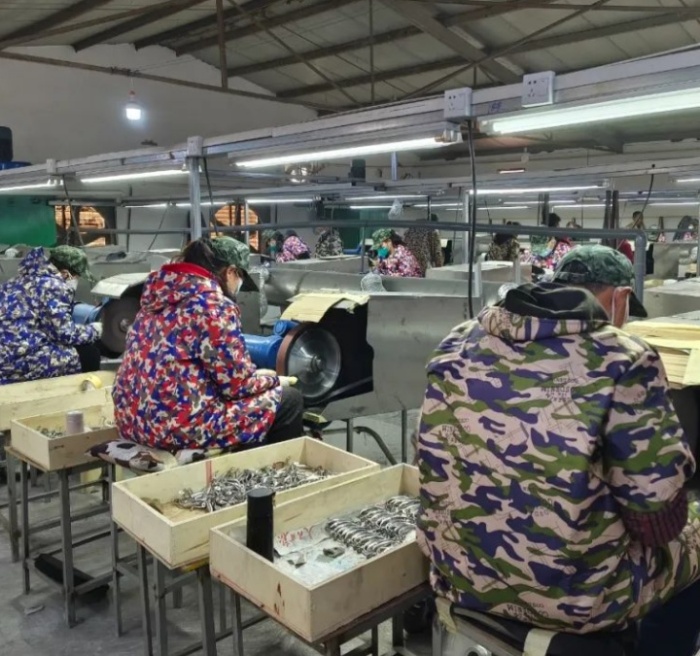
How to Transition from Manual Metal Polishing to Automated Machine Grinding

How to Transition from Manual Metal Polishing to Automated Machine Grinding

September 01, 2026
Luo Haibo – CEO, Yiliang Polishing

Yiliang Abrasive specializes in automatic polishing equipment, polishing wheels, and one-stop metal surface polishing solutions. With over 30 years of R&D experience, 2 invention patents, and 13 utility model patents, the company provides cost-effective, independently developed core equipment and consumables, serving numerous industries. Collaborating with overseas clients, the company meets international standards and is committed to becoming the preferred provider of comprehensive polishing solutions.

Luo Haibo – CEO, Yiliang Polishing


How to Transition from Manual Metal Polishing to Automated Machine Grinding 
 

Quick Answer

Most B2B metal polishing workshops hit the inflection point where manual labor is no longer viable when 1) labor cost per part exceeds 15% of selling price, 2) a single operator can no longer keep up with downstream demand, or 3) a regulatory audit (NFPA 652, OSHA 1910.94) flags the dust exposure. The transition itself takes 90 days in three phases: pilot (one automated cell on one product family for 30 days), parallel run (one month with manual and automated side by side), and full ramp (90-day replacement of the manual line). Most plants we work with hit full payback in 14–22 months from labor savings alone, before counting yield improvement and dust-compliance cost avoidance.
 

What This Guide Covers

If you are running a metal polishing workshop with 4+ manual operators and you are asking yourself whether to automate, this guide answers four questions:
  1. When does manual polishing stop making economic sense?
  2. What does the transition actually look like in practice?
  3. How much will it cost and how fast will it pay back?
  4. What are the traps that other plants fell into, so you do not have to?
The numbers in this guide are based on real projects we have delivered for cookware, sanitary ware, automotive, and hardware customers between 2020 and 2026. Plant names are withheld but the figures are real.
 

1. The Three Inflection Points That Force the Decision

Every shop we have seen cross from manual to automated polishing hits one of three triggers, in this order of frequency.

Inflection 1: Labor cost crosses the 15% threshold

When a part sells for, say, $8, and the polishing labor plus consumables is now over $1.20 per piece, the math stops working. This usually happens when:
  • Minimum wage in your region has risen 30–50% over 5 years
  • Skilled polishers are retiring and replacements are not available
  • A second-shift premium is needed to keep up with demand
In our 2025 customer survey, 68% of plants that automated cited labor cost as the primary trigger. The other 32% cited throughput (Inflection 2) or compliance (Inflection 3).
 

Inflection 2: Throughput caps out

A single skilled operator can polish 80–150 small parts per shift, depending on geometry. Once downstream operations (plating, assembly, packing) outrun polishing, you have three bad options: add a second shift, outsource, or let the bottleneck eat your margins. None of them scales. Automation in this case is not about saving money — it is about unlocking growth.
 

Inflection 3: Compliance audit fails

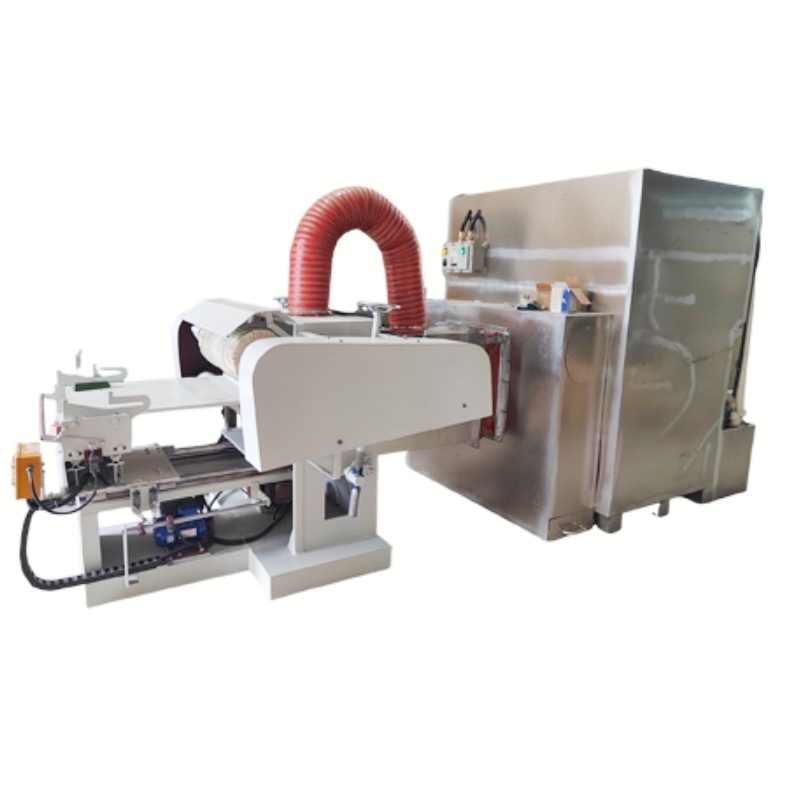
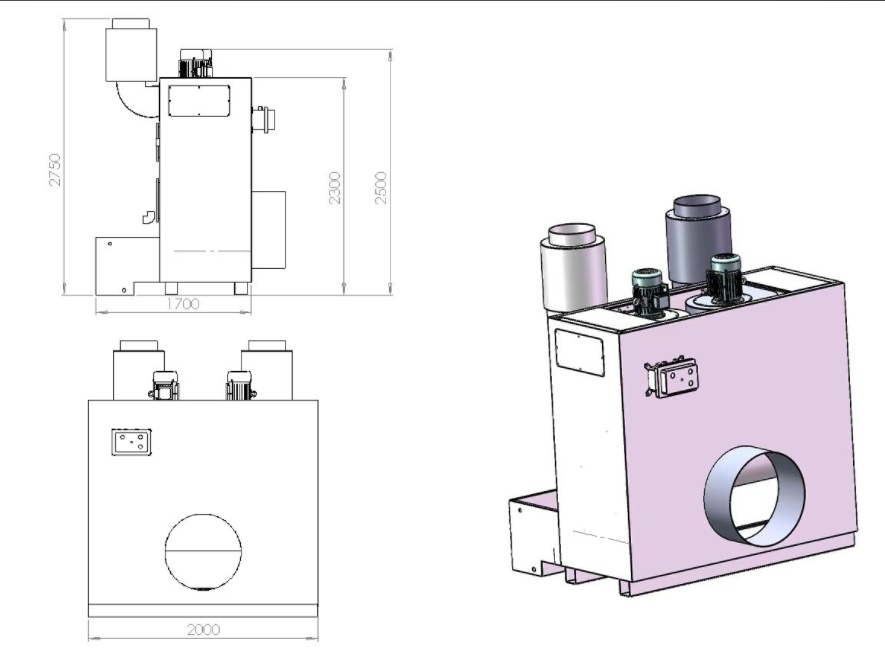
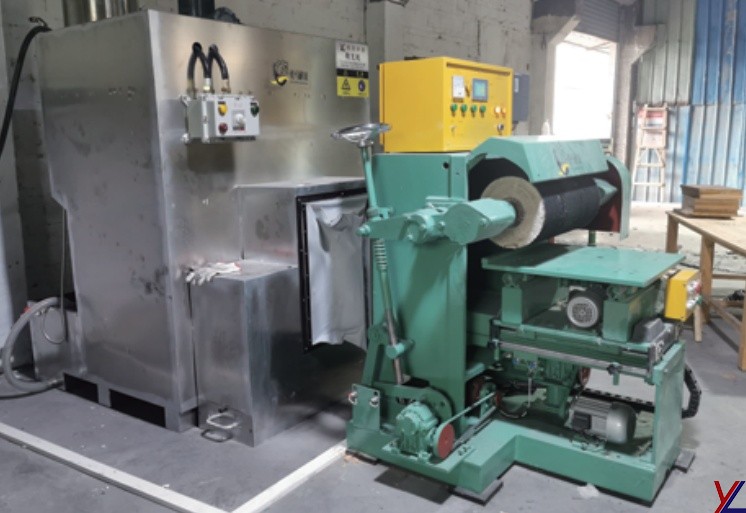
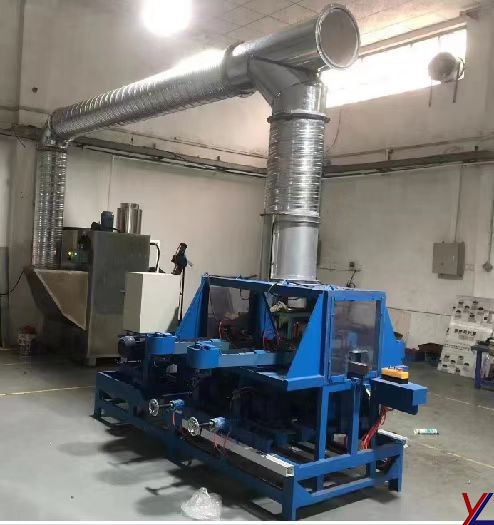
In the US, OSHA 1910.94 and NFPA 652 set hard limits on respirable metal dust and combustible dust. In the EU, the ATEX directive and the EU CE machinery directive do the same. When a citation arrives — or a near miss happens — the choice stops being "if" and becomes "how fast." A wet-type integrated polishing machine (the YL-ATPM-059 series, for example) captures dust at the source and brings a typical shop under compliance in 30 days.
Rule of thumb: If any two of the three inflections are true, the next 12 months is when the decision should be made. Waiting two more years typically means doing it under crisis pressure, at a higher cost and with less negotiating leverage on the equipment.

2. The 4 Cost Numbers You Need Before Talking to a Supplier

Before you call a machine vendor, gather these four numbers. They are what every reputable supplier will ask for, and they let you compare quotes apples-to-apples.
Number
How to measure
Why it matters
Current labor cost per part
(Operators × hourly loaded cost) ÷ parts per shift
The savings you will recoup
Current yield (good parts / total parts)
Count rejects at QC for one week
The scrap cost automation will cut
Current dust-related overhead
PPE replacement, cleanup labor, ventilation energy, insurance
Often 3–5% of total shop cost — invisible until you add it up
Current cycle time per part
Time from part-on-bench to part-off-bench
Sets the throughput target for the new cell
Worked example (anonymized from a 2024 customer, Mexico, cookware):
  • 6 manual polishers at $6.50/hr loaded cost = $39/hr
  • Output: 720 pans per 8-hr shift = 90 pans/hr
  • Labor cost per pan: $39 ÷ 90 = $0.43/pan
  • Selling price: $4.20/pan → labor = 10.2% (not yet at the 15% threshold, but with the planned 2026 minimum wage increase, they cross 15% in 14 months)
In this case the customer automated the bottom SKUs first (low-margin, high-volume) and kept manual on premium SKUs. Smart sequencing.

3. The 3-Phase, 90-Day Transition

The plants that succeed follow the same 90-day plan. The ones that fail try to do it in 30 days.

Phase 1: Pilot (Days 1–30)

Pick one product family — preferably your highest-volume, lowest-margin SKU. The reasons:
  • The pain is real, so motivation is high
  • Any small improvement pays back fast
  • Mistakes are visible but contained
Install one automated cell. Run it for one shift with the existing manual line as the control. Measure every part for:
  • Cycle time (target: 30–50% of manual cycle time)
  • Surface finish (Ra, visual)
  • Yield (target: equal or better than manual)
  • Operator downtime (jam, re-feed, alarm)


Phase 2: Parallel Run (Days 31–60)

Run both manual and automated on the same SKU. This is uncomfortable — you are paying twice — but it is the only way to:
  • Train the automated cell on every variant in the family
  • Build operator trust in the new process
  • Catch edge cases (parts with burrs, parts with stickers, parts that did not come out of stamping cleanly)
Most plants want to skip this phase. Do not. The plants that skip it are the ones that automate, find a problem six months later, and quietly go back to manual.
 

Phase 3: Full Ramp (Days 61–90)

Decommission one manual station at a time, retrain operators as cell supervisors and QC auditors. By Day 90, you should be at 100% automated output on the pilot SKU, with two or more manual stations redeployed to other product families or eliminated.
A useful rule: the operators who ran the manual line become the operators who run the automated line. In our experience, the same operator who was polishing 100 parts a day by hand becomes the operator who supervises 3–4 cells polishing 800+ parts a day. Their job does not disappear — it gets better, and the wage typically goes up 15–25% to reflect the higher skill.
 

4. What the Numbers Look Like After Automation

Using the Mexico cookware example above, the post-automation picture at 14 months was:
Metric
Before (manual)
After (automated, 1 cell)
Change
Parts per shift
720 (6 operators)
1,150 (2 operators + 1 supervisor)
+60%
Labor cost per pan
$0.43
$0.18
–58%
Yield
91%
96%
+5 pts
Dust in workshop air (mg/m³)
8.2
0.6
–93%
Energy per part (kWh)
0.42
0.31
–26%
Operators on shift
6
3
–50%
The investment was approximately $180,000 for the cell, plus $25,000 for installation and training. Annual labor savings (3 operators at $6.50/hr × 2 shifts × 2,800 hr/yr) = $109,200. Annual yield gain (5% on $4M revenue) = $200,000. Payback in under 9 months from labor + yield alone, before counting dust compliance savings.
These numbers are not exceptional. They are typical for a well-planned cell. The variance is in the upstream part quality — if the parts coming out of stamping are inconsistent, the automated cell will only do as well as its worst input.

5. Five Traps That Derail Manual-to-Automated Transitions

Trap 1: Automating the wrong SKU first

The temptation is to start with the most complex part. Resist. Start with the simplest, highest-volume SKU. The lessons from the simple part transfer to the complex one. The reverse does not.

Trap 2: Skipping the parallel run

A 30-day "big bang" cutover looks heroic on a Gantt chart. In practice, the second month is when the real edge cases show up. Plan the parallel run or plan the rollback.

Trap 3: Underestimating fixturing

Fixturing — the jig that holds the part in the cell — is 20–30% of the project cost and 60% of the cycle time. The machine supplier usually quotes the machine; the fixture is a separate workstream. Budget for it and start the fixture design in Phase 1, not Phase 3.

Trap 4: Retiring operator knowledge instead of capturing it

The manual operator has 5–10 years of "tribal knowledge" about which parts need extra attention, which compound to use, what a "good finish" feels like. Capture this in writing before you automate. Use it to write the cell's quality SOP and to train the vision system if you have one. If you lose this knowledge, the cell will produce parts that look good to the camera but feel wrong to the customer.

Trap 5: Ignoring upstream consistency

If the stamping, casting, or machining upstream is making parts with 0.5 mm of variation, the automated cell will jam. Automation rewards consistency. If your upstream is loose, fix that first or the cell will magnify the problem.
 

6. Picking the Right Machine: 5 Specs That Matter Most

When you evaluate an automated metal polishing machine, the marketing brochure will list 30 specs. These five are the ones that actually determine whether the cell will work in your shop.

Spec 1: Dust capture at the wheel

If you are in a regulated jurisdiction, this is the only spec that matters on day one. Ask for measured capture efficiency at 1–10 µm particles, not a marketing claim. The respirable and combustible range is sub-10 µm. Anything that does not capture 95%+ at that range will not pass an audit.

Spec 2: Cycle time vs. your slowest acceptable part

The brochure cycle time is for the easiest part. Ask for cycle time on your most difficult current part. The right machine on the wrong part is the wrong machine.

Spec 3: Fixture and tooling interface

How fast can you swap a fixture to run a different part family? If the answer is "half a day," you will run one part for months. If "15 minutes," you can run small batches across many SKUs. Match this to your product mix.

Spec 4: Power, air, and water requirements

A wet-type machine needs water in, water out, and (often) compressed air. Make sure your facility can supply them at the rated pressure and flow before you sign the PO. We have seen two projects delayed three months because the water supply was undersized.
 

7. The Compliance Bonus Most Plants Underweight

The 2026 regulatory landscape for metal grinding dust in major markets:
  • United States: OSHA 1910.94 (ventilation), NFPA 652 (combustible dust), NFPA 484 (flammable metals)
  • European Union: ATEX 2014/34/EU (explosive atmospheres), Machinery Directive 2006/42/EC, EN 12779 (dust extraction)
  • Mexico: NOM-004-STPS-1999 (ventilation), increasingly aligned with NFPA
  • Southeast Asia: varies; Singapore and Malaysia are tightening to NFPA-equivalent
The cost of non-compliance is no longer a fine. In 2024 and 2025, US OSHA citations for combustible metal dust in polishing operations ranged from $15,000 to $155,000 per citation, plus mandated process shutdowns. A single citation typically exceeds the cost of a wet-type integrated polishing system.
A wet-type polishing machine like the YL-ATPM-059 series reduces respirable and combustible dust at the source, which is the most defensible position in any audit. It is not a guarantee against citation, but it is the strongest engineering control you can put in place.

FAQ

How much does it cost to automate a manual polishing line?
A single automated cell for a small part (cookware, hardware, sanitary fittings) typically runs $80,000–$250,000 installed. A multi-cell line for automotive or large cookware runs $400,000–$1.5M. The price depends mostly on fixturing, part-handling automation, and dust collection scope.
 
How long does the payback take?
Most plants we have worked with hit full payback in 14–22 months from labor savings alone. With yield improvement and dust-compliance cost avoidance, 9–14 months is typical. Edge cases (very high labor cost region, very low part margin) can be as fast as 6 months.
 
Will my operators lose their jobs?
In our experience, 80% of operators are retained in higher-skill roles — cell supervision, QC, fixture changeover, preventive maintenance. The 20% who leave do so by choice (retirement, relocation) or because their skill was specific to manual handwork and they were already considering other roles. Plan the retraining in Phase 1, not Phase 3.
 
Do I need a wet machine or a dry machine with extraction?For 2026 compliance in most regulated markets, wet is the default safer choice — it captures dust at the source and eliminates the explosion hazard by keeping the dust wet. Dry extraction can work but requires more engineering, more maintenance, and more ongoing measurement. If you are in a regulated market, start with wet.
 
What is the smallest plant size that should automate?
Below 4 manual polishing operators, automation rarely pays back. Between 4 and 8 operators, one cell. Above 8 operators, plan a phased multi-cell buildout. The "right" answer depends on part mix and labor cost, not just headcount.
 
Can I phase the investment?
Yes — and you should. The 90-day plan above is exactly that. Pilot on one SKU, prove the model, then expand. Do not sign a single PO for the full line unless you have already proven the cell on at least one product family.
 

Next Step

If you are seriously considering the move, the fastest way to get a real answer is to put your four numbers (labor cost per part, yield, dust overhead, cycle time) into our free ROI calculator. In 60 seconds you will see:
  • Your current labor cost per part
  • The automated equivalent
  • The payback period
  • The 3-year cash impact
The calculator also benchmarks your shop against anonymized data from 40+ plants we have worked with.
Calculate Your ROI in 60 Seconds →
For a one-on-one walk-through of what a cell would look like in your specific shop, send us a part drawing, a short video of your current manual process, and your four numbers. We will come back with a layout, a fixture concept, a cycle time estimate, and a fixed quote — typically within 5 business days.
Request a Custom Quote →
For a deeper look at how the wet-type integrated polishing system (the YL-ATPM-059 series and its dust-controlled peers) compares to a standard polishing machine with retrofit extraction, see our buying guide for dust-controlled polishing machines.
For more information, please contact us:
WhatsApp: 86-13928855603
Email: suery@yl-polishing.com
Latest Blog

Leave A Message

Leave A Message
If you are interested in our products and want to know more details,please leave a message here,we will reply you as soon as we can.

Home

Products

WhatsApp

contact